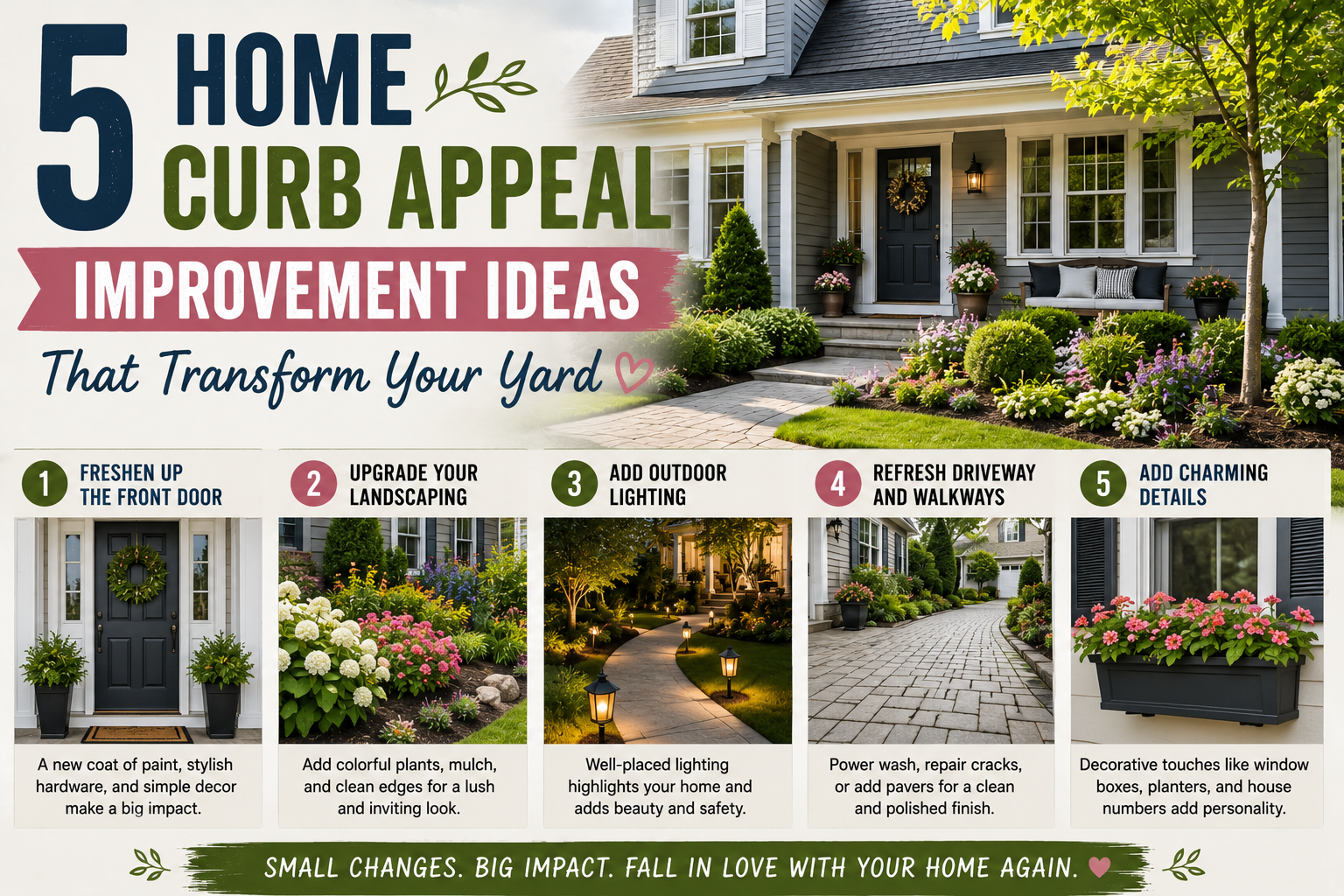
If your home’s exterior has been quietly embarrassing you every time you pull into the driveway, I get it — I’ve been there. I’m Michael, and when I first started tackling the outside of my house, I honestly didn’t know where to begin. The edging was a mess, the trees were overgrown, and the mulch looked like it had given up on life years ago. But here’s the good news: you don’t need a massive budget or a landscaping crew to make a serious difference. These five home curb appeal improvement ideas cost me around $300 total and completely changed the way my house looks from the street.
Whether you’re trying to impress the neighbors, prep for a sale, or just feel proud pulling into your own driveway, these projects are all totally doable on a weekend. I’ve broken everything down step by step so you can follow along and make it your own. And if you’re looking for even more ways to boost your home’s look without breaking the bank, check out my post on 5 DIY outdoor curb appeal projects you can do this weekend — it pairs perfectly with everything I’m covering here.
Let’s get into it. Here are the five tips that made the biggest impact on my home’s curb appeal — and how I pulled each one off.
1. Hardscaping and Edging: Start With a Clean Foundation
This was the first thing I tackled, and honestly it made the biggest visual difference right out of the gate. Years of root growth and soil movement had completely demolished all the edging around my planters and trees. Everything was crooked, uneven, and just looked neglected — the kind of thing you stop noticing until a visitor points it out and you can’t unsee it.
The good news? My edging stones were actually still in great shape — they were just dirty and sitting at weird angles. So the most budget-friendly move was to pull them all out, give them a solid pressure wash on both sides, and relay them nice and level. After pressure washing, they practically looked brand new. To establish clean perimeters around each tree, I used string lines and spray paint to mark perfect circles before placing anything back. On the right side of the driveway, I added a whole new flowerbed to match the existing one leading up to the front entry — I measured it out, transferred those measurements to the ground with marking paint, and used string to eyeball the straight runs along the house.
One tip I’d pass along: lay your edging stones on the flattest surface you can manage, and keep a rubber mallet nearby to coax them into place. I also ended up doing a double layer everywhere, which really pops from the street and gives you more depth for mulch. It takes a little extra time, but the visual payoff is absolutely worth it. You can also find Edging Material that makes this process even cleaner if you want a more modern look.
2. Pressure Washing: The Cheapest Big-Impact Project You Can Do
I cannot stress this one enough — even if you think your house looks fine, pressure wash it anyway. Trust me on this. I thought my sidewalk was relatively clean until I ran a pressure washer over it and watched what felt like a decade of grime lift right off the concrete. It was genuinely shocking how much was hiding in plain sight.
If you have vinyl siding like I do, a pressure washer will clean it up beautifully in a fraction of the time it would take to scrub by hand. But the real transformation happens on the concrete — the driveway, the walkway, the front steps. All of it benefits enormously. The best part is you don’t even need to own a pressure washer. You can rent one from your local home improvement store for less than $50, spend a couple of hours outside, and walk away with results that look like a professional cleaning service came through.
Pair this with good Yard tools to clear any debris beforehand, and you’ll be amazed at the transformation. This is hands-down one of the highest-ROI home curb appeal improvement ideas on this entire list — low cost, low effort, massive visual impact.
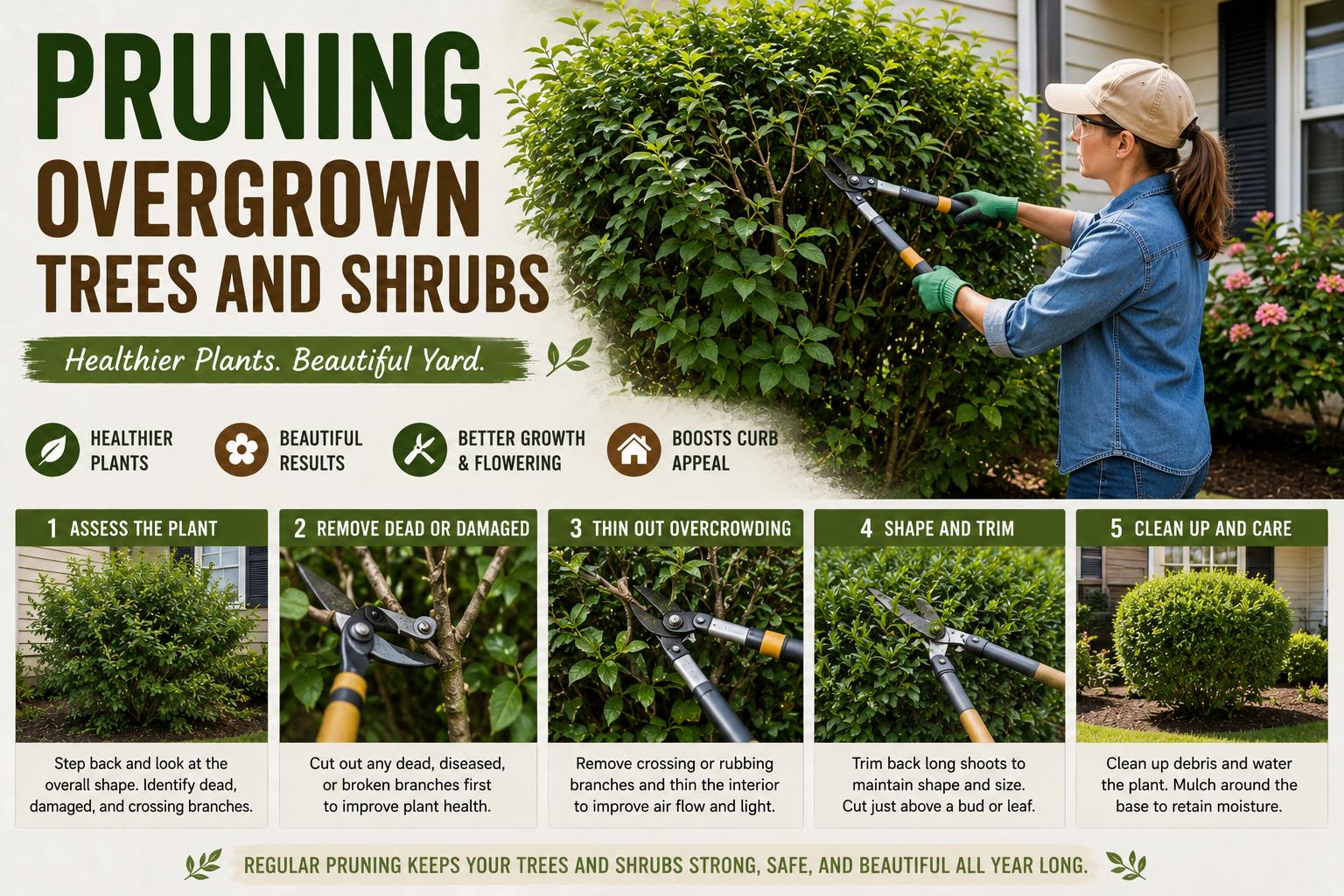
3. Pruning Overgrown Trees and Shrubs
Overgrown trees and shrubs are an eyesore, but here’s the thing — they’re also one of the easiest fixes on this list. I had a tree in my front yard that was dropping berries and sending seedlings all over the place. It was a mess. I went at it with a saw and cleaned it up once and for all, and the difference was immediate.
My bigger tree just needed its yearly trim so you could actually see the front of my house from the street — which, when you think about it, is kind of the whole point of curb appeal. I also gave my front shrubs a good haircut to bring some shape back to them. They had that wild, uncontrolled look going on, and a little trimming gave the whole front of the house a much more intentional, cared-for feel. A good Chainsaw handles the bigger branches, and a weed eater cleans up the edges around the base. For higher branches, a pole pruner is a game-changer that keeps you safely on the ground.
Pruning is one of those things that takes maybe an afternoon but completely reframes how your home reads from the curb. When your landscaping looks intentional, the whole house looks more put-together — even if nothing else has changed yet.
4. Weed Control and Fresh Mulch
My weeds were completely out of control, and my mulch hadn’t been replaced in years. This one needed to get fixed, and fast. The first step was ripping out all the old weed control fabric and digging out the tired, broken-down mulch to start completely fresh. I raked everything into piles and scooped it up — getting rid of the old stuff made an immediate difference even before the new mulch went down.
In areas like around my mailbox post where I didn’t use concrete edgers, I installed no-dig edging to contain the mulch and keep it separated from the grass. This makes mowing around those areas so much easier. Before laying any new mulch, I put down fresh landscaping fabric as a weed block — cut it oversized, staked it down with metal yard stakes, then trimmed the excess with scissors. I did the same in the long flower beds along the house, cutting around utility lines for full coverage.
I ended up using about 35 cubic feet of mulch, which ran me roughly $60 — not bad at all for the coverage I got. I made sure to lay a thick layer so it would hold up through harsh winters without blowing away or breaking down too quickly. The combination of clean edging, fresh weed fabric, and a thick layer of new mulch pulled the entire front yard together in a way I wasn’t quite expecting. It’s one of those home curb appeal improvement ideas that sounds simple but delivers results way beyond what the price tag suggests.
5. New Plants and Landscape Lighting
The final tip — and honestly one of my favorites — was swapping out an ugly, thorny shrub that had no business being in the front of a house and replacing it with a couple of hydrangea bushes. The original plant was a mystery to me (thorns and all), and pulling it out felt like a public service. The hydrangeas immediately softened up the landscaping and gave the front of the house a much more welcoming, polished look.
When I picked up the plants from the nursery, they recommended mixing the existing soil with some fresh topsoil to give the new plants the best shot at thriving — especially important if, like me, you don’t exactly have a green thumb. I followed that advice and gave them a good start. The last piece of the puzzle was landscape lighting. I wanted the house to look just as good at night as it does during the day, so adding some well-placed lights along the walkway and around the new plantings was the perfect finishing touch. LED lights are my go-to for this — they’re energy-efficient, long-lasting, and cast a warm glow that makes everything look intentional after dark.
The combination of fresh plantings and good lighting is what separates a yard that looks “done” from one that looks truly finished. If you want more ideas for refreshing your outdoor spaces with simple upgrades, my post on driveway makeover curb appeal ideas has some great complementary projects worth checking out.
Tips and Best Practices for Boosting Your Home’s Curb Appeal
After going through all five of these projects myself, here are a few things I’d tell anyone just getting started:
Always start with a clean slate. Pressure wash before you paint, plant, or mulch. Everything looks better when the underlying surfaces are clean, and you’ll be able to see what actually needs attention versus what just needs a wash.
Work from the ground up. Hardscaping and edging first, then pressure washing, then pruning, then mulch and weed control, then plants and lighting. This order keeps you from undoing work you’ve already done.
Double up your edging for visual impact. A single layer of edging stones looks fine. Two layers look intentional and polished. It costs a little more time but zero extra money if you’re reusing existing stones.
Don’t skip the weed fabric. It’s the unglamorous part of the job, but skipping it means you’ll be back out there pulling weeds in a month. A good layer of landscaping fabric under your mulch saves you hours of maintenance down the road.
Budget smartly. My entire project came in around $300, which is a fraction of what a landscaping company would charge. Tools like a rented pressure washer and reused edging stones kept costs low. For more budget-friendly inspiration, I’ve got a whole post on budget home improvement DIY ideas that save thousands — well worth a read before you start any project.
Frequently Asked Questions About Home Curb Appeal Improvement Ideas
How much does it realistically cost to improve curb appeal on a budget?
My entire five-project curb appeal overhaul cost me about $300, and that included all new mulch, plants, and landscaping fabric. The key to keeping costs low is reusing what you already have — my edging stones just needed cleaning and releveling, not replacing. Renting tools like a pressure washer instead of buying them also makes a big difference. A professional landscaper doing all of this work could easily charge thousands, so doing it yourself is where the real savings are.
How often should I replace mulch in my flower beds?
Most experts recommend refreshing your mulch every one to two years depending on your climate. In colder climates with harsh winters, mulch tends to break down and blow away faster, so you may need to top it off annually. The key is maintaining a thick enough layer — about 2 to 3 inches — to effectively suppress weeds and retain moisture. Always lay fresh landscaping fabric underneath when you do a full replacement rather than just piling new mulch on top of the old.
What’s the best low-maintenance plant for front yard curb appeal?
Hydrangeas are a fantastic choice — they’re relatively forgiving, produce beautiful blooms, and really soften up a home’s exterior. Native shrubs and ornamental grasses are also great options since they’re adapted to your local climate and require minimal upkeep. When you’re buying plants at a nursery, always ask about soil preparation — mixing in fresh topsoil with your existing soil gives new plants a much better chance of thriving, especially if your yard has compact or depleted soil.
Do I need special equipment to pressure wash my driveway and siding?
Not at all. You can rent a pressure washer from most home improvement stores for under $50 for the day, which is more than enough time to do your entire driveway, walkway, and siding. For vinyl siding, use a lower pressure setting to avoid damage. For concrete, you can go higher pressure to really lift embedded grime. A surface cleaner attachment (often available as an add-on rental) makes doing large flat concrete areas much faster and gives you a more even result.
My Final Thoughts on These Curb Appeal Projects
I couldn’t be happier with how my home’s front yard turned out. The neighbors noticed right away, which honestly felt great after letting things slide for too long. The combination of clean edging, a freshly pressure-washed driveway, trimmed trees, brand-new mulch, and thoughtful plants and lighting completely changed how my house reads from the street — and it only cost me $300.
What I love most about these home curb appeal improvement ideas is that every single one of them is approachable for a solo DIYer with basic tools and a free weekend. You don’t need to be a landscaper or spend a fortune to make your home look like you care about it. You just need a plan and the willingness to get outside and do the work.
I’d love to see what you do with your own space — share your before and after photos with me on social media and tag me so I can see your results. And if you’re ready to keep the momentum going inside the house too, don’t miss my post on home improvement projects that make a big impact fast — because once the outside looks great, it’s hard not to want the inside to match.