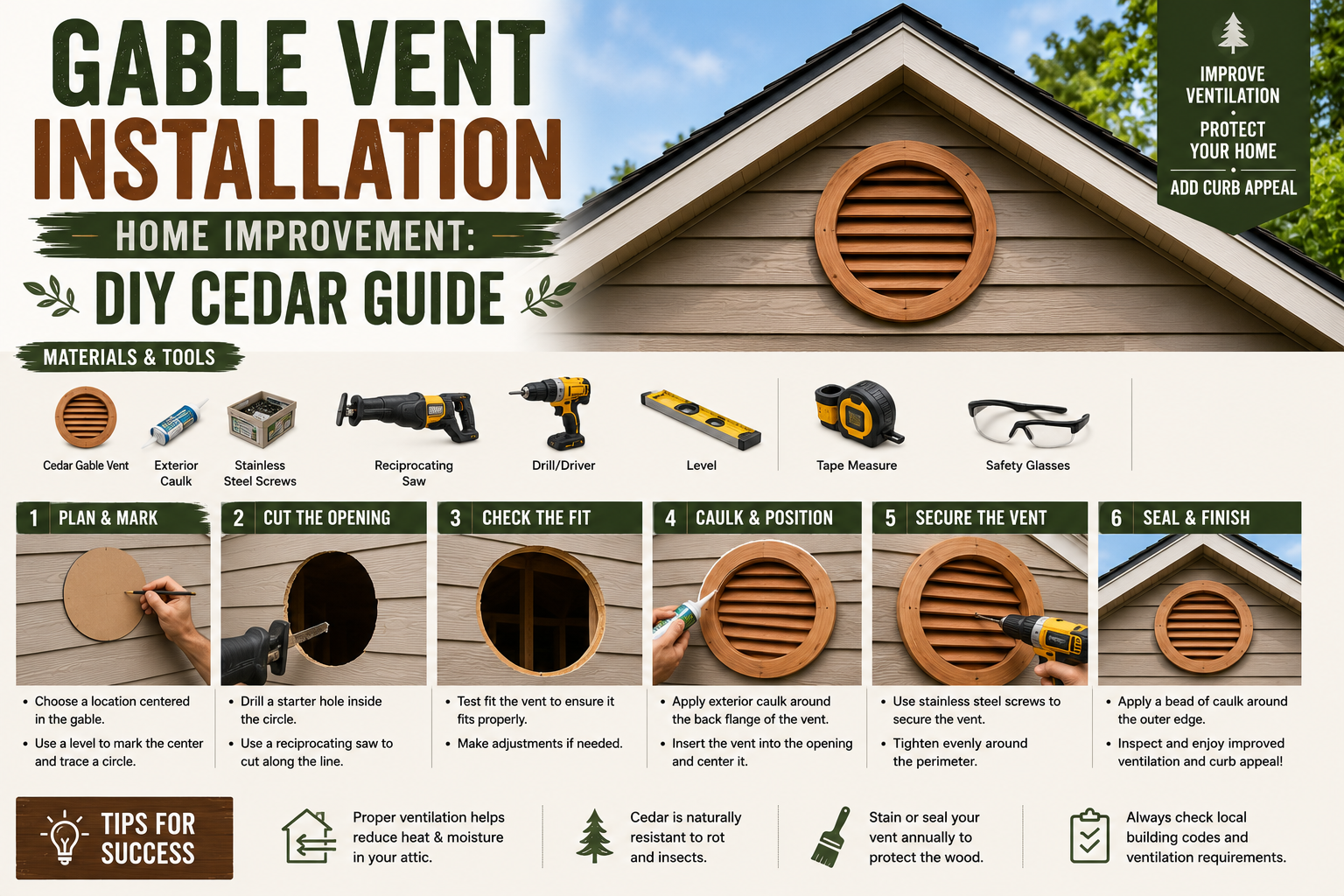
If you’ve been staring at a blank, boring wall on the side of your house and wishing there was something there — I get it completely. That’s exactly what pushed me to finally tackle this gable installation project, and I’m so glad I did. What looks like a complicated, contractor-level job actually turned out to be one of the most rewarding weekend builds I’ve done, and I saved nearly $1,200 doing it myself.
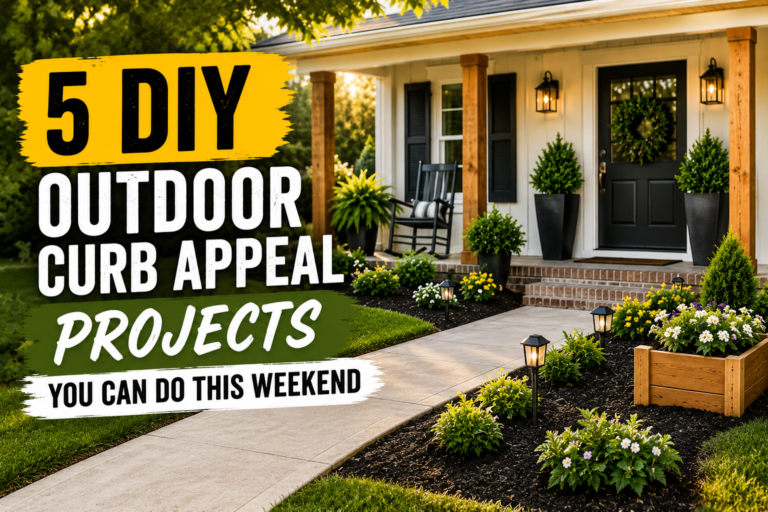
This gable vent installation home improvement project took me about a day and a half from start to finish — and that includes dinner breaks, family time, and a few “stare at it to make sure it looks right” moments. The total cost came in around $84, compared to the $1,200 quote I got from a local contractor. I’ll walk you through every step so you can do the same thing at your house. If you want even more ideas for boosting your home’s exterior appeal, check out my guide on 5 DIY outdoor curb appeal projects you can do this weekend.
Fair warning before we dive in: this project is not beginner-friendly. It involves angle cuts, working at height, and some patience. If you’re brand new to DIY, I’d recommend starting with something simpler first — like a planter box or a basic fence panel — and then working your way up to this. But if you’ve got a few projects under your belt, let’s get into it.
Choosing the Right Wood: Why I Went With Cedar
The first decision I had to make was what type of wood to use for the gable. My instinct was to go with cedar, even though it costs a bit more than the pine or treated lumber I’ve used on other projects like trash can fences or planter boxes. The reasoning is simple: this gable is going up high on the house, and I really don’t want to be climbing a ladder to re-sand or replace boards a few years down the road.
Cedar is a naturally rot-resistant wood that holds up beautifully against the elements, and as a bonus — it smells incredible walking down that aisle at the hardware store. For the smaller boards that make up the interior of the gable design, I grabbed pieces at around $6.67 each. For the wider bottom board — which I wanted wider because that’s what I saw most often on Pinterest inspiration photos — I paid around $14.43. It’s a little more, but the visual impact is absolutely worth every penny. The wider base board gives the whole gable that classic farmhouse look that I was going for.
When you’re at the store, take your time picking boards. Look down the length of each board for warping or bowing, and avoid any with large knots that could compromise the wood’s strength. Cedar is lighter than a lot of other woods too, which I’ll come back to later — that matters a lot when you’re trying to hold a gable up against your roofline while drilling it in.
Measuring Your Gable: Getting the Pitch Right
Here’s the thing about measuring for a gable — I genuinely cannot give you exact dimensions because every house is different. Your roof pitch, the width of your gable end, and how large you want the decorative element to be will all determine your cut list. What I can tell you is the smartest trick I used: take a piece of cardboard up to the roofline and trace the angle of the pitch directly. That cardboard template becomes your guide for all your angle cuts, and it takes all the guesswork out of it.
A tape measure is your best friend here, but so is patience. Measure twice (or three times), cut once — that old saying is never more true than on a project like this. Once you cut wood short, you can’t add it back. I always recommend cutting slightly long and trimming down rather than rushing and ending up with boards that are too short. The angle cuts are what take the most time, and it was honestly the part of the project that required the most focus.
Tools You’ll Need (And Where to Borrow or Rent)
For this project, you’ll need a few key tools. A circular saw is essential for the straight cuts, and you’ll need a miter saw or similar tool for the angle cuts — these are the cuts that give the gable its pitched shape to match your roofline. A nail gun helps hold things in place while you work, and you’ll want a drill for the final installation. You’ll also want a good hammer on hand for any adjustments.
If you don’t own a miter saw, don’t panic. Here are your options: Lowe’s and Home Depot will do straight cuts for free, but they won’t do angled cuts in-store. You can rent a miter saw for the day at most tool rental places for a pretty affordable price — and remember, even with rental costs factored in, you’re still going to come in way under that contractor quote. Another option is to borrow a tool from a friend or neighbor who has one. The Pocket hole joinery kit is also something you’ll want to pick up — it runs around $40 and is one of the most useful tools for joining boards cleanly and securely.
Building the Pocket Holes: The Part That Surprised Me
I’ll be honest — I was a little intimidated by the pocket hole joinery portion of this build before I started. I’d read about it and seen it used on other projects, but I’d never done it myself. Here’s what I found: it’s actually one of the easiest steps in the whole process. The Pocket hole joinery jig guides your drill bit at the correct angle automatically, and within a few minutes I had clean, strong joints in the wood.
This is a great reminder that the things you’re most nervous about in a DIY project often turn out to be the easiest parts. The things that seem simple — like making sure every board is perfectly symmetrical and the whole design looks even — are actually where the time goes. I spent a lot of time just standing back, looking at the frame, adjusting, and looking again. That’s not wasted time. That’s what separates a great result from a sloppy one. Take it slow, check that everything is level and symmetrical, and don’t rush through assembly. For more big-impact exterior projects you can tackle, check out my post on home improvement projects that make a big impact fast.
Assembling the Gable Frame
With all the boards cut and the pocket holes drilled, it’s time to start assembling the frame. I used a nail gun to hold everything in place temporarily as I worked — this lets you make small adjustments before anything is fully locked in. Once I had the basic frame started, I took it outside and held it up against the house just to double-check the fit and proportions before going any further. This step is so important. It’s much easier to make adjustments on the ground than when you’re up on a ladder.
The gable I built has the classic farmhouse style — a central decorative element with boards running at angles to match the roof pitch, with a wider base board anchoring the bottom. If you search Pinterest for gable end ideas, you’ll see there are tons of variations. Some are simpler with fewer cuts, some are more elaborate. If you’re new to angle cuts, I’d recommend searching for a simpler version that still gives you that wood element without as many complex angles. But if you’re comfortable with your tools, the traditional farmhouse style like I built is a beautiful choice.
Staining the Cedar: Getting a Rich, Even Color
Once the frame was assembled and I was happy with how everything looked, it was time to stain the wood before installation. I stain before hanging because it’s so much easier to get full coverage on a flat surface than trying to paint something that’s 15 feet up on your house. I laid down an old sheet in my garage, propped the gable up on scrap pieces of wood so I could get underneath the edges, and got to work with a paintbrush.
The technique I use is simple: brush the stain on generously, then follow up with an old clean rag to wipe off the excess. This gives you a more even, absorbed finish rather than a surface coat that can peel. I stained both the front and the back of the gable — even the back doesn’t need to be perfect, but you want it protected so raw wood isn’t exposed to moisture. I used the same stain color I use on my flower boxes and other wood elements around the house to keep everything cohesive. Getting that color match right is one of those details that makes the whole exterior look intentional and well-designed.
One tip I learned the somewhat hard way: don’t rush the stain-matching process. I actually tested a scrap piece of cedar first before committing, because cedar can absorb stain differently than other woods. Take that extra step — it’s worth it.
Sealing for Weather Protection: This Step Is Non-Negotiable
After staining, I let everything dry for at least an hour before applying the sealer. This step is not optional, especially if your house gets real weather — rain, sun, humidity — any of it. I use Thompson’s Water Seal as my exterior sealer, and I apply it to both the front and back of the gable. Cedar is naturally durable, but sealing it properly is what makes it last for many years without warping, cracking, or fading.
Here’s a critical tip: make sure you use an exterior-rated sealer. Some polyurethane products at the hardware store will be marketed as though they work outside, but they’re really not designed for full exterior exposure. I’ve learned this lesson firsthand and had to redo work because of it. Stick with a product specifically labeled for exterior wood, and apply it generously. I also applied a second coat of stain after sanding down the first sealed coat — the second coat goes on darker and richer, and the wood grain really pops. It looks so much more finished and premium than a single coat. If your other exterior wood elements have two coats, match that on your gable so everything looks uniform.
A Note on Sanding and Getting Everything to Match
Here’s a real-talk moment: sometimes you finish a step and realize it doesn’t match the rest of your house the way you expected. That happened to me — after sealing the first coat, my planter boxes had gone darker with their second coat of stain, and suddenly my gable didn’t quite match. So I sanded off the sealer layer, applied a second coat of stain to bring the color up, and then resealed everything.
Was it extra work? Yes. Was it worth it? Absolutely. When every wood element on your house — the gable, the flower boxes, the fence accents, the front door trim — all matches in color, the exterior looks completely cohesive and professionally done. Don’t be discouraged if a project takes an unexpected extra step. That’s just part of DIY, and the end result is always better for it. While the stain dried, I also cleaned up any drips on nearby surfaces — a microfiber cloth works great for wiping stain splatters off brick or painted surfaces before they set.
Installing the Gable: Tips for Hanging It Solo or With Help
Installation day is the exciting part. Before going up the ladder, I did one very smart thing: I pre-started all the screws into the gable while it was still on the ground. Trying to drive screws at an awkward angle while holding something heavy overhead on a ladder is frustrating and potentially dangerous. Getting the screws started at ground level means once you’re up there, you just need to hold it in position and finish driving them in — much faster and safer.
Cedar’s lighter weight is a genuine advantage here. Compared to other hardwoods or pressure-treated lumber, cedar is manageable to hold in place while you work. If you can get a second person to help — one holding the gable against the house and one on the ladder driving screws — that’s the easiest approach. If you’re working alone, just take your time, pre-start those screws, and work carefully. A laser level is incredibly helpful for making sure your gable is centered and level before you commit those screws. I also use a caulk gun to run a bead of weatherproof caulk around the edges after installation to keep moisture from getting behind the wood — that small step adds years to the life of the project.
Tips and Best Practices for Gable Installation Home Improvement
Choose the right wood for longevity. Cedar is my top recommendation for exterior gable projects. It’s naturally rot-resistant, lighter than many alternatives, and takes stain beautifully. The extra cost over pine or untreated lumber is worth it when you consider you won’t be replacing it anytime soon.
Always seal both sides. Moisture can get behind the gable when it rains, so stain and seal the back just as thoroughly as the front. It doesn’t need to be picture-perfect on the back, but it does need to be protected.
Use a cardboard template for your pitch angle. Hold cardboard up to your roofline and trace the angle before making a single cut. This template saves you from measurement errors that waste expensive wood.
Pre-start your screws on the ground. Always get your screws partially driven into the gable before going up the ladder. Working overhead while holding a board in place and trying to start a screw from scratch is a recipe for frustration.
Stain before you install. Getting full, even stain coverage is infinitely easier when the piece is flat on the ground. Do all your staining and sealing before the gable goes up.
Match your existing exterior wood elements. Test your stain on a scrap of the same cedar before committing. Getting the color right so your gable matches your fence, flower boxes, or trim makes a huge difference in the finished look.
Take your time on symmetry. Step back often and look at the overall shape and balance of the gable as you’re assembling it. Getting it symmetrical is what separates a professional-looking result from something that looks homemade in the wrong way.
Frequently Asked Questions
How much does a DIY cedar gable installation cost?
My total came in at around $84, though some of that was low because I already owned certain tools from previous projects. If you’re starting from scratch with no tools, budget a bit more — but even buying a Pocket hole joinery kit and renting a miter saw for the day, you’re still going to come in well under $300, compared to the $1,200 contractor quote I received. The cedar boards themselves are the biggest material cost, but they’re worth it for a long-lasting result.
Is gable installation a beginner-friendly DIY project?
I’d say it’s intermediate-level. The angle cuts required to match your roofline pitch are more complex than straight crosscuts, and working at height adds a safety consideration. If you’ve never done any woodworking before, I’d recommend building a few simpler projects first — like a planter box or basic fence panels — to get comfortable with your tools before attempting this. That said, if you go in knowing it’ll take patience and careful measuring, a motivated DIYer can absolutely accomplish it. If you want ideas for easier starting projects, my post on budget home improvement DIY ideas that save thousands has plenty of beginner-friendly options.
What type of sealer should I use on a cedar exterior gable?
Use a sealer that is specifically labeled for exterior use — Thompson’s Water Seal is what I use and trust. Avoid polyurethane products that claim to work outdoors but aren’t truly designed for full exterior exposure. You’ll apply it over your stain after the stain has fully dried (at least an hour), and you’ll want to coat both the front and back of the gable. This sealer step is what protects your wood from rain, UV, and humidity for years to come.
Can I do this project alone, or do I need a helper?
You can do it alone — the key is to pre-start all your screws into the gable while it’s still on the ground, so you’re not trying to start screws overhead one-handed. Cedar’s lighter weight helps a lot here compared to heavier woods. A second person makes the installation easier and faster, but it’s not strictly required. Just take it slow, use a laser level to get your positioning right before committing, and work safely on a stable ladder.
Final Thoughts
This gable installation project genuinely exceeded my expectations. It’s one of those home improvement upgrades that looks like you spent serious money — and hired a pro — but actually cost less than $85 in materials and about a day and a half of work. Every time I pull into the driveway now, that cedar gable catches my eye and I feel that satisfying pride that only comes from building something yourself.
If you’ve been on the fence about tackling something like this, my honest advice is: go for it. Do your research, make your cardboard template, cut carefully, and take your time on the staining and sealing. The result is worth every careful, measured cut. And if you want to explore more ways to transform your home with DIY projects, my post on 8 DIY home improvement projects on a budget that transform your space is a great next read. Drop your questions in the comments below — I love hearing from other DIYers working on their homes!