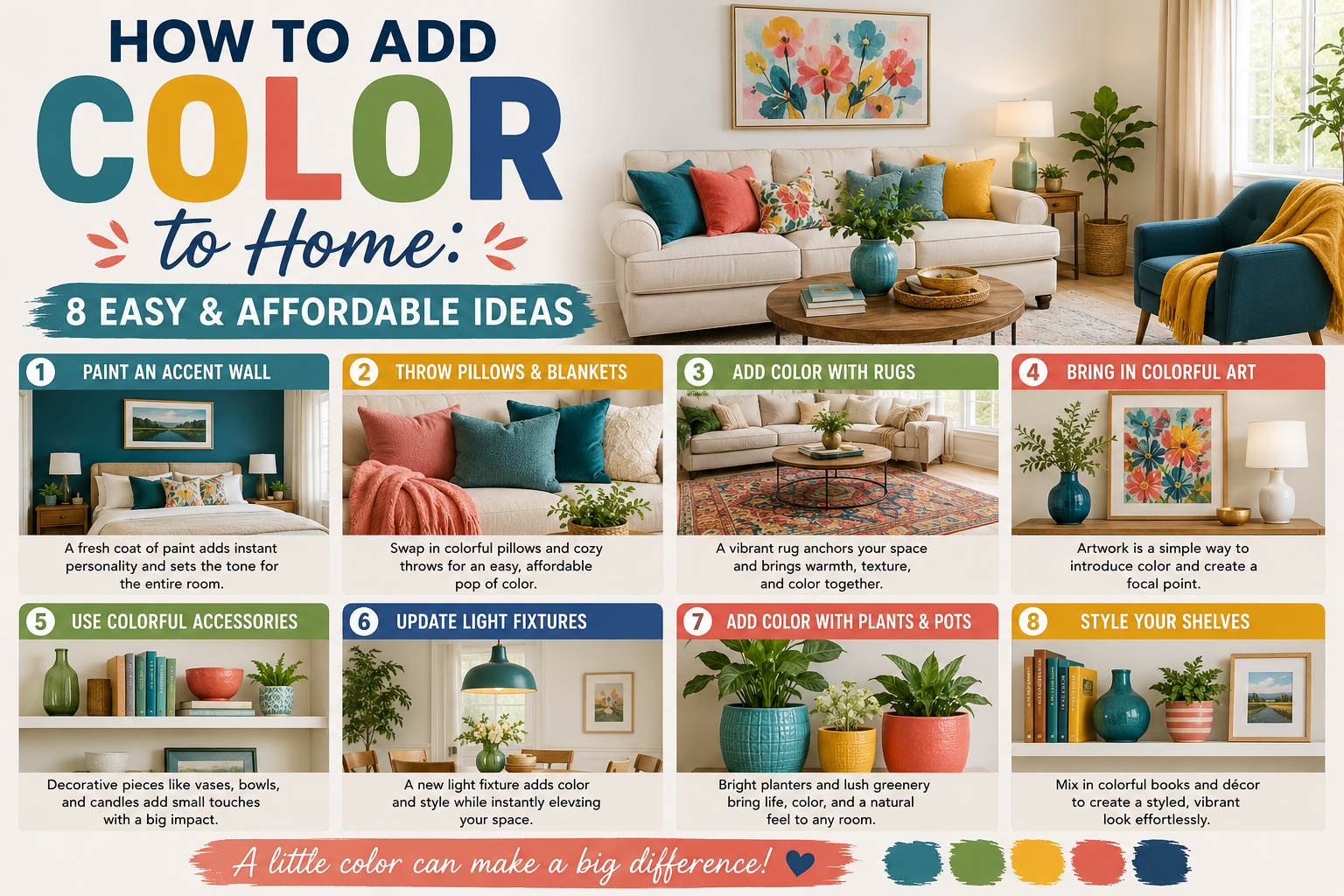
If your home is feeling a little flat or just plain boring, I’ve got the fix — and it’s a lot easier than you might think. Learning how to add color to your home doesn’t mean you have to rip everything apart, spend a fortune on new furniture, or commit to a dramatic paint job you’ll regret in six months. There are so many creative, budget-friendly ways to inject personality and excitement into every room, and I’m going to walk you through all eight of my favorites.
I truly believe that color is one of the most powerful tools you have as a homeowner or renter. A single pop of the right shade can completely transform how a space feels — making it warmer, more energetic, or just more “you.” The key is knowing which method works best for your lifestyle, your budget, and your comfort level. Some of these ideas are bold moves, and some are as easy as throwing a pillow on your couch. Either way, they all make a real difference.
Whether you’re someone who loves a dramatic statement or someone who just wants to dip a toe into the world of color, I’ve got something here for you. I’ve personally used most of these in my own home, and the results have always been worth it. So let’s get into it — here are eight ways to add color to your home starting today. And if you’re looking for even more inspiration, check out my roundup of paint ideas and home color makeover projects for a full deep dive into color-forward transformations.
1. Paint an Accent Wall
One of my absolute favorite ways to add color to a space is through a well-placed accent wall. The idea is simple: pick one wall in the room that you really want to highlight, paint it a bold or contrasting color, and keep everything else neutral. I’ve done this with a rich teal wall against a crisp white room, and the result is striking — your eye goes right to it, and the whole space feels intentional and designed.
The best part? You only need a small can of Sherwin Williams paint or Benjamin Moore to get the job done. We’re talking an affordable transformation without buying a single piece of new furniture. And if you’re nervous about committing to paint, peel and stick wallpaper is a fantastic alternative — it goes on easy, looks great, and peels right off when you’re ready for something new.
Don’t feel like you have to paint the entire wall either. You can paint the bottom half with a contrasting color, go three-quarters up, or add board and batten for a textured look. There are so many wall treatment variations to explore, and they all add something special. For a step-by-step tutorial on one of my favorite wall treatments, check out my DIY wainscoting accent wall tutorial — it’s a beginner-friendly project that makes a massive impact.
2. Paint Your Doors
This is the tip that I think most people completely overlook, and honestly, it might be the most underrated one on this list. Painting a door — whether it’s your front door or an interior door — adds a surprising punch of color that completely changes the feel of a room. Most people focus entirely on their walls and forget that the door is a major visual element in any space.
The great news is that you don’t even need a full can of paint. A $5 sample from the paint store is often enough to cover an entire door. I did this in my bathroom and the transformation was genuinely shocking — it took maybe an hour, cost almost nothing, and now that door is one of my favorite details in the whole house. You can go moody and dark, soft and muted, or bold and vibrant depending on the vibe you’re going for.
And since it’s just paint, there’s no real risk here. If you change your mind or the color stops feeling fresh, you just paint right over it. Grab a quality paintbrush and a sample pot, and you’ve got yourself a weekend project that genuinely transforms your space.
3. Bring in Plants and Flowers
If the idea of committing to a wall color or a painted door still feels like too much, plants are your best friend. Adding greenery — whether it’s lush houseplants, fresh flowers, or even a simple potted succulent — instantly brings life and color into any space. If your home leans neutral and you want to keep it that way, green is actually the perfect accent color because it feels natural and grounding rather than loud or trendy.
I love bringing greenery into almost every room of my home. It’s one of those touches that makes a space feel lived-in and intentional without requiring much effort or money. Flowers are especially great because you can change them out with the seasons, keeping your color palette feeling fresh year-round without any permanent decisions.
The other thing I love about plants is that they work in literally every room — kitchen windowsills, bathroom counters, bedroom nightstands, living room shelves. They’re low-commitment, often low-cost, and they have the added bonus of genuinely improving the air quality and mood of a space. If you’ve never used greenery as a design tool, now is the time to start.
4. Use a Colorful Rug
A rug is one of the most powerful and underutilized color tools in home decorating, and it’s also one of the most renter-friendly options out there. When you throw a boldly colored or patterned rug down in a neutral room, it anchors the entire space and gives you something to build the rest of the design around. It’s one of those things where you don’t realize how much the room needed it until it’s there.
The great thing about rugs is that they scale to whatever you need. If you want to go big and make a statement in your living room, a large area rug in a vibrant color is the way to do it. If you want something smaller and less committal, a bath mat or kitchen mat does exactly the same thing on a smaller scale. Either way, you’re introducing color in a way that you can roll up and swap out anytime you want.
I love the idea of using a different color method in each room — an accent wall in one room, a painted door in another, and a colorful rug in the next. That variety keeps things interesting throughout the whole house and ties everything together in a really cohesive way without feeling matchy-matchy.
5. Add a Statement Piece of Colored Furniture
This one is a bolder move, and I always say: if you’re going to go this route, go all in on one piece. Pick one beautiful sofa, one accent chair, or one standout ottoman and let that be your color moment. Don’t try to have colored furniture everywhere — that can quickly feel overwhelming. But one intentional, well-chosen colored piece in a neutral room? That’s a showstopper.
Colored furniture is definitely a bigger investment than the other ideas on this list, which is why I’d encourage you to really think about what color speaks to you long-term rather than just chasing whatever’s trending right now. Reupholstering or replacing furniture isn’t as easy as repainting a door, so give it some thought. That said, when it’s done right, a bold velvet sofa or a vibrant accent chair is genuinely one of the most striking things you can do to a living room.
If you’re not ready to invest in new furniture but love this idea, keep an eye out at thrift stores or on Facebook Marketplace for solid, well-built pieces you can have reupholstered in a color you love. It’s often cheaper than buying new and gives you a truly one-of-a-kind result.
6. Paint Your Cabinets
Painted cabinets are having a serious moment right now, and for good reason — they’re one of the most dramatic and satisfying ways to add color to a kitchen or bathroom. While the all-white kitchen is still a classic look, more and more people are breaking it up by painting their lower cabinets a deep color or giving their upper cabinets a contrasting shade. It makes each element of the kitchen feel distinct and intentional rather than everything blurring into one big mass of white.
I painted my bathroom cabinets myself as a DIY weekend project, and it was so much easier than I expected. You don’t need to hire anyone — just take the cabinet doors off, sand them lightly, apply a good primer, and then paint with your chosen color. The result is a space that looks completely custom and professionally designed, and nobody needs to know you did it yourself in a weekend.
This approach also works beautifully if you just want to paint the island while leaving the perimeter cabinets white or wood-toned. That contrast creates a really high-end, intentional look that’s very popular right now. For more inspiration on budget-friendly kitchen updates, take a look at my guide to a budget kitchen renovation under $5,000.

7. Layer in Throw Pillows and Blankets
Okay, this is probably the easiest thing on this entire list, and there’s a good chance you’re already doing it — but I want to make sure you’re doing it intentionally. Throw pillows and blankets are the fastest, most affordable, and most commitment-free way to add color to any space. You don’t have to buy whole new pillows either — just swapping out pillow covers in a fresh color is all it takes.
IKEA is one of my go-to spots for affordable pillow covers because they always have tons of colors and they’re constantly refreshing their inventory to reflect current trends. You can pick up a few new covers for next to nothing and completely change the vibe of your sofa or bed in about five minutes. Layer in a cozy throw blanket in a complementary or contrasting color and you’ve got a space that looks pulled together and full of personality.
What I love about this approach is that you don’t have to pick just one color. Layering multiple colors through pillows and blankets is actually a great design move — it adds depth and dimension without feeling random, especially if you tie the shades back to something else in the room. And when the seasons change or a new color trend catches your eye, you just swap them out. It couldn’t be easier.
8. Use Home Decor and Wall Art
Last but definitely not least, home decor and wall art are some of the best tools you have for introducing color into your space without any major commitments. A boldly colored vase on a shelf, a vibrant print on the wall, a set of colorful display shelving pieces — all of these small additions can make a huge difference in how a room feels. Sometimes you just need one or two carefully chosen items to bring a space to life.
A gallery wall is one of my favorite examples of this in action. By covering one wall with a curated collection of colorful prints and photos, you essentially create an accent wall effect without touching a single paintbrush. It’s completely customizable, endlessly changeable, and a great way to showcase art you love while adding major visual interest to the room.
The beauty of this approach is the flexibility. You can go as small or as large as you want, spend as little or as much as your budget allows, and change everything out whenever a new color trend catches your eye. Home decor is also a fantastic way to bring in multiple colors at once — a few well-placed pieces can create a cohesive color story that flows throughout your entire home.
Tips and Best Practices for Adding Color to Your Home
Now that you’ve seen all eight methods, here are a few guiding principles I always keep in mind when working color into a space:
Start small if you’re nervous. You don’t have to go bold on day one. Begin with something low-commitment like throw pillows or a plant, get comfortable with that color in your space, and then decide if you want to go bigger. There’s no wrong pace here.
Pick one method per room. Rather than trying to add color through multiple methods in the same room, choose one approach and let it shine. An accent wall, a colorful rug, or a statement piece of furniture — pick one and build the rest of the room around it. This keeps things cohesive and prevents the space from feeling chaotic.
Don’t stress about trends too much. Trends come and go fast, and the most important thing is that you love the color in your space. That said, if you want to stay on trend without over-committing, use trending colors in your most swappable elements — pillows, blankets, decor, and flowers — and keep your bigger investments (paint, cabinets) in slightly more timeless shades.
Use the right tools. When painting walls or doors, a quality extendable roller stick makes the job so much faster and easier, especially for larger walls. A good paintbrush is essential for cutting in clean edges around doors and trim. Don’t skip the primer either — it makes a huge difference in how the final color looks and how long it lasts.
And if you want to explore even more budget-friendly ways to transform your space, my post on budget home improvement DIY ideas that save thousands is packed with projects that deliver big results without the big price tag.
Frequently Asked Questions
What is the easiest way to add color to a home without painting?
The easiest no-paint options are throw pillows, blankets, rugs, and home decor pieces. These are completely commitment-free, affordable, and can be swapped out any time you want a change. Plants and flowers are another fantastic option — they add natural color and life to any room without any permanent decisions.
How do I choose the right accent wall color?
Start by looking at what’s already in the room — your furniture, flooring, and existing decor. Choose a color that complements those elements rather than competing with them. If you’re unsure, grab a few paint sample cards and hold them up against your existing pieces in different lighting throughout the day before committing. Sherwin Williams paint and Benjamin Moore both offer great sample programs so you can test before you invest.
Is painting cabinets a DIY-friendly project?
Absolutely — I did my bathroom cabinets myself in a single weekend. The key is in the prep: clean the surfaces thoroughly, sand lightly, apply a good primer, and then apply your paint in thin, even coats. Remove the cabinet doors before painting for the cleanest result, and use masking tape to protect any surfaces you don’t want painted.
How can renters add color to their home without risking their deposit?
Renters have more options than ever. Peel and stick wallpaper is a great choice for accent walls — it goes on easily and removes cleanly. Colorful rugs, throw pillows, blankets, plants, and home decor pieces are all completely renter-friendly. You can also use removable hooks to hang colorful wall art without putting holes in the walls. These methods can transform a space dramatically without touching the actual structure of the home.
Final Thoughts
Knowing how to add color to your home is really just about understanding which method works best for your lifestyle, your budget, and your confidence level. Whether you’re ready to go bold with a painted accent wall or you just want to throw a colorful pillow on your couch, every single one of these eight approaches makes a real and noticeable difference. Color has an incredible ability to breathe life into a space, and you don’t have to spend a lot of money or take big risks to get that effect.
My advice? Start with one room, pick one method, and see how it makes you feel. I’d bet you’ll love it — and then you’ll want to try another method in the next room. Before you know it, your whole home will feel more vibrant, more personal, and more exciting to come home to every day. That’s the whole point, and it’s completely within reach no matter where you’re starting from.
I’d love to know — what’s your favorite way to add color to your home? Drop a comment below and let me know! And if you found this post helpful, share it with someone who’s been stuck in a beige rut. They’ll thank you for it.