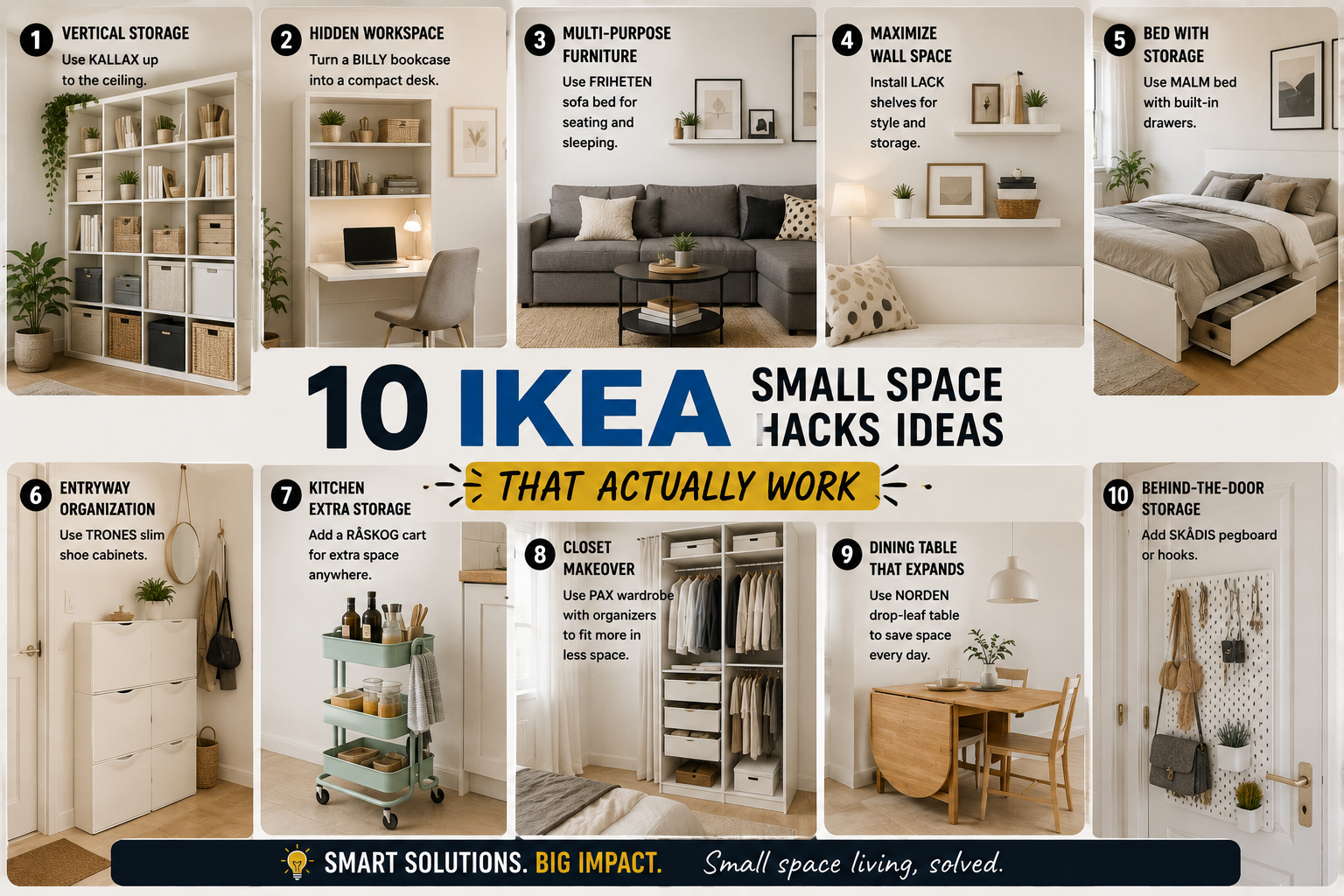
If you’ve got a small space, I’ve got you. I’m Michael, and today I’m walking you through my absolute favorite IKEA small space hacks ideas — the ones I actually use in my own home and the ones I used to completely transform a real under-the-stairs storage nook for a local micro-bakery owner named Melissa and her husband Patrick. We worked with a $300 budget, and the result honestly blew me away. I think it’s going to blow you away too.
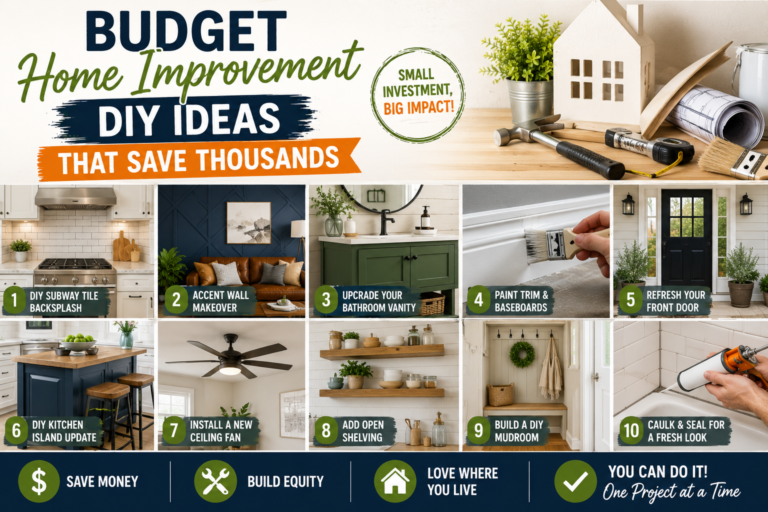
Whether you’re dealing with a cramped craft room, a chaotic mudroom, a tiny pantry, or one of those weird awkward spaces every house seems to have, IKEA is genuinely one of the best places to find solutions that are affordable, modular, and actually look good. I’ve been using IKEA hacks for years, and I want to prove to you that these ideas aren’t just for design pros — they’re for anyone willing to try something new. And if you love budget-friendly transformations, you’re going to want to check out my full post on budget home improvement DIY ideas that save thousands too.
I also want to say this upfront: this is not a sponsored IKEA video. Every product I mention is something I personally love and recommend. Now let’s get into all 10 ideas — plus a full real-life makeover reveal at the end.
1. IKEA Wheelie Carts for Modular, Moveable Storage
I have shared this hack in so many videos because I genuinely cannot stop recommending it. The IKEA wheelie cart — the classic one that comes in at just $39.99 — is one of those products that earns its space in every single room. I use them throughout my house, including my craft room, and they are endlessly practical. The magic of a wheelie cart is that it moves. If you’ve got a hard-to-reach corner, an awkward nook, or a space that serves multiple purposes, the ability to roll your storage in and out is a total game changer.
One of my favorite tricks is to grab a bamboo wood cutting board from Dollar Tree and set it right on top of the cart. Instantly, you’ve got a surface that looks intentional and elevated. For Melissa and Patrick’s under-the-stairs space, I used a smaller, lower-profile IKEA wheelie cart that rings in at just $19.99. Its compact size meant it fit perfectly in the tight area while still giving Patrick the ability to move things around easily. If you’re only going to grab one IKEA product, make it this one.
2. IKEA Cube Shelves With Modular Insert Systems
IKEA cube shelves are one of the most versatile storage solutions I’ve ever used. I have them in my kids’ room, in my craft room, and I’m constantly finding new ways to configure them. But here’s what a lot of people don’t know: IKEA sells an entire ecosystem of inserts that fit inside any standard 13×13 cube shelf. I’m talking drawers, dividers, baskets, and more — and most of them run between $15 and $20.
The Kallax insert system (which I refer to as the “Call system” because that’s how my brain works) is a perfect example. In about 20 minutes, you can screw in the sides, pop in some drawers, and suddenly your plain cube shelf looks like a piece of custom built-in furniture. I use mine to store sewing supplies and extra fabric, and no one ever guesses it’s IKEA. The open shelves and baskets from IKEA are especially great for the price — you get a solid size and shape at a fraction of what you’d pay elsewhere. If you want even more built-in storage inspiration, I broke down the full IKEA Billy vs. custom comparison in my post on built-in bookcase ideas.
3. Mountable IKEA Wall Storage With Hooks and Hanging Racks
This is one of those IKEA small space hacks ideas that people consistently overlook, and I don’t understand why. IKEA’s wall-mounted storage options are incredibly affordable and look genuinely great. The hanging racks work beautifully in kitchens and bedrooms, and the hook packs — you can get a five-pack for $5 — mean you can create a seriously organized wall moment for less than $20 total.
I picked up one of their wall pieces that comes with four hooks and two small cups for less than $5, and it’s rated five stars for a reason. The quality is solid and it works in mudrooms, entryways, hallways, or anywhere you need to hang things without drilling a huge custom solution into the wall. Pair it with a hanging rack and some of those 99-cent extra hooks, and you’ve got a system that looks like it came from a boutique home store. I stayed tuned on this one for the under-the-stairs makeover — it played a big role in keeping that space organized and accessible.
4. Tension Rods With Cafe Curtains for Small Nooks and Closets
This is one of those super simple, totally underrated IKEA hacks that costs almost nothing and makes a huge visual impact. For Melissa’s under-the-stairs space, one of the first things I grabbed was a small tension rod for less than $5, paired with two cafe-style curtains. The goal was to give the space a door-like cover so Patrick could easily open it up to access his seeds, but also close it off so he didn’t have to look at it constantly.
The result was a clean, farmhouse-style curtained nook that looked intentional and matched the rest of Melissa’s home perfectly. And here’s the thing — a tension rod requires zero drilling, zero tools, and zero commitment. If it doesn’t work, you pull it down. This hack works equally well in small closets, pantry openings, under sinks, or any spot where you want to conceal clutter without installing actual cabinet doors. Easy, cheap, and genuinely effective.
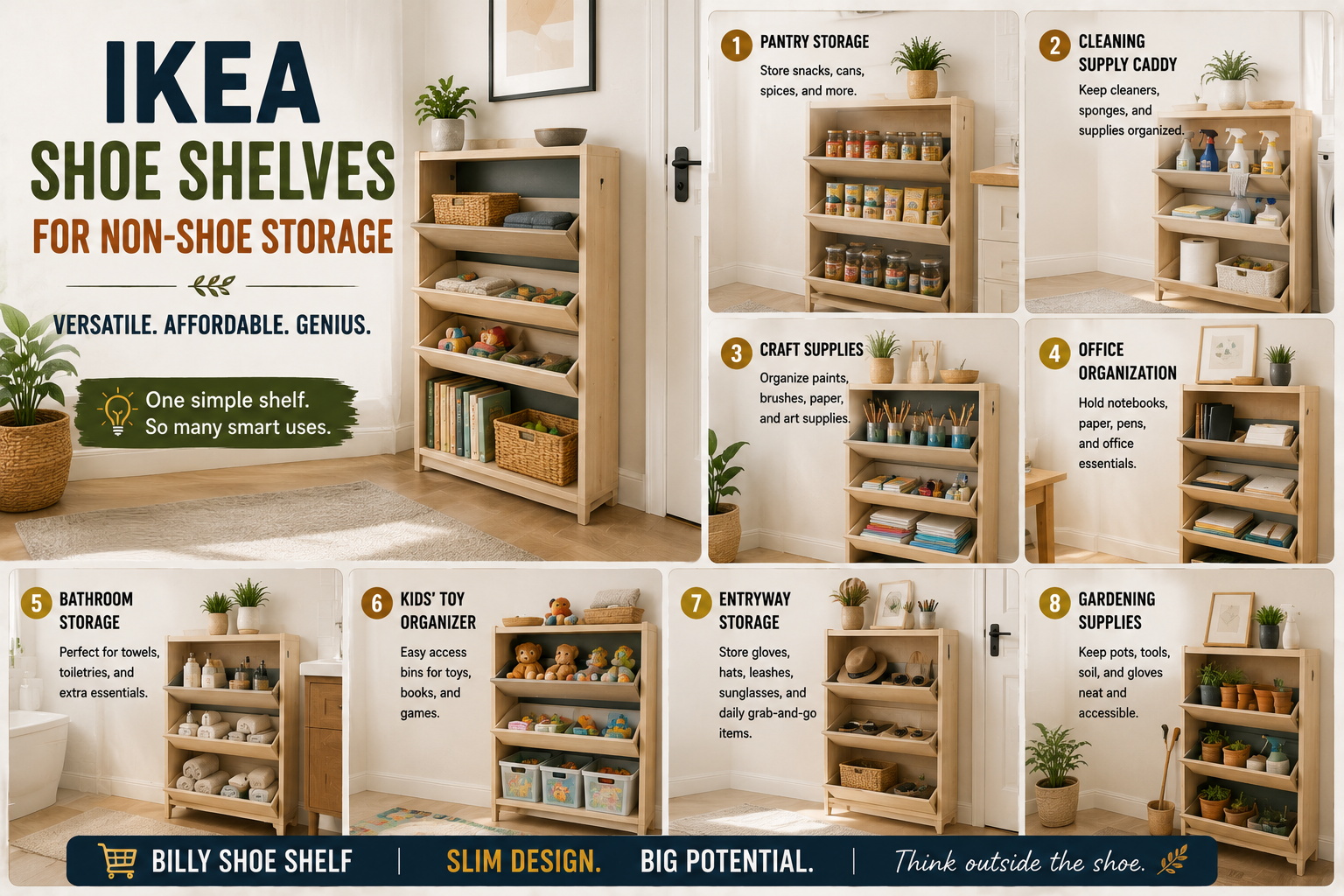
5. IKEA Shoe Shelves for Non-Shoe Storage
I’ve recommended the IKEA shoe shelf so many times on my channel because it is one of the most flexible, low-profile storage solutions they make — and most people only use it for shoes. That’s a mistake. The stall shoe shelf I picked up for Melissa’s project was the perfect fit for storing Patrick’s seed collection. Each individual shoe slot is basically a small clear-front container that lets you see exactly what’s inside, which brings me to one of my core small-space principles: visibility is key.
When you’re working with a tight, hard-to-navigate space, you need to be able to see everything at a glance. Crawling around in an abyss looking for something is the fastest way to abandon a storage system entirely. The shoe shelf gave Patrick at-a-glance access to all his most-used seeds while keeping them neatly organized. It’s a product that costs very little, takes up minimal floor space, and genuinely earns its keep in any small space.
6. IKEA 365 Clear Containers for Decanting and Labeling
If you’ve never decanted your pantry or storage items into matching clear containers, let me tell you — it changes everything. I discovered the IKEA 365 product line during this project and I was immediately sold. These are clear, clean-lined containers that hold up to two quarts, and the best part? They come with airtight bamboo lids that fit across the entire range. You can mix and match sizes and the same lid works on all of them.
For Patrick’s seed business, these were a perfect choice. He had been storing seeds in repurposed pretzel containers — which, honestly, is a great method and I kept some of them in the final design — but for a proper business setup, having clearly labeled, matching containers that you can see through at a glance is a huge upgrade. I decanted his most-used seeds into the IKEA 365 containers, gave them beautiful labels, and kept the pretzel containers for the less-used stock. The combo looked cohesive and completely intentional.
7. IKEA Billy Bookcases as DIY Mudroom Storage
The Billy bookcase is probably the most famous IKEA product in the world, and for good reason — it is endlessly adaptable. A few years ago, I helped a friend create a mudroom in her garage using simple Billy bookcases, and the trick I used was to leave the backing off and attach them directly to the wall. No backing means the whole system feels more built-in and permanent, and wall-mounting adds stability so they don’t tip.
She didn’t have the square footage for a proper mudroom, so we essentially built one by lining up Billy bookcases near the back door and adding hooks and baskets. The total cost was a fraction of what custom cabinetry would have been, and it looked like it had always been there. If you’re working on a tight budget and want something that looks intentional and custom, this Billy bookcase hack is one of the best in the game. If you want to see how I approach similar built-in storage projects, check out my full guide on built-in bookshelves for home office storage.
8. IKEA Wood Items (Like the Moopy Shelf) for Apothecary-Style DIY Furniture
I want to push back on the idea that IKEA is only good for cheap, disposable furniture. Some of their wood pieces are genuinely high quality and take stain beautifully. The Moopy shelf — yes, that’s what it’s called, and yes, I love it — is a great example. I bought several of these, stained them, and added drawer poles to the fronts to create a DIY apothecary cabinet look. I’d seen a similar piece on Facebook Marketplace that retailed for almost $4,000. My IKEA version? A fraction of that.
Apothecary-style furniture is really trending right now, especially with the vintage and cottagecore aesthetic coming back strong. When I lined these up together and finished them properly, nobody who came into my house ever guessed it was an IKEA hack. The piece I built ended up going to a dear friend of mine who uses it to store all of her jewelry-making supplies across different spots in her home. It looks elegant, it’s functional, and it cost almost nothing compared to the vintage alternative. Don’t sleep on IKEA’s solid wood and wood veneer options.
9. IKEA Brimnes Wardrobes for Hiding Craft Room (or Any) Clutter
I get asked about my craft room storage constantly, so let me finally spill it. I use three IKEA Brimnes wardrobes lined up side by side, and they hold every single one of my craft supplies. Yes, they are wardrobes. No, I did not put clothes in them. And that is exactly the point of thinking creatively with IKEA products.
The inside of each Brimnes wardrobe is fully accessible with hanging space and shelves that I’ve reconfigured to hold fabric, tools, paper, ribbon, and all the other crafty things that would otherwise be scattered across every surface in the room. The doors close, everything is hidden, and my craft room looks clean and intentional even when it’s actually a beautiful disaster inside. The Brimnes wardrobes aren’t expensive, they’re sturdy, and they prove that sometimes the best storage hack is just putting a door in front of it.
10. Repurposing and Garbage-Picking to Stay Under Budget
This one isn’t technically an IKEA product, but it’s a mindset I use on every single project and it saved us a meaningful chunk of our $300 budget in the under-the-stairs makeover. When I’m working on a space, especially a small one, I always look around first before I spend money. In Melissa and Patrick’s case, I spotted a shelf they were about to toss and realized that with a little cleanup, it would work perfectly in the back section of the nook for storing less-frequently used items.
I also kept Patrick’s original pretzel containers in the design — because honestly, they worked well and there was zero reason to replace them just for the sake of aesthetics. I cleaned them up, incorporated them into the system, and they looked intentional alongside the IKEA 365 containers. The lesson here is simple: before you spend money, look at what you already have. Small spaces on a tight budget reward creativity and resourcefulness more than they reward spending. Every dollar you save on repurposed items is a dollar you can spend on the piece that really matters.
Tips and Best Practices for IKEA Small Space Hacks
After years of doing these projects, here are the principles I come back to every single time I’m tackling a small space with IKEA products:
Visibility is everything. In a tight space, you need to see what you have at a glance. Clear containers, open-front shelves, and labeled storage systems prevent you from losing things in the back of an abyss. The IKEA 365 containers, the shoe shelves, and the cube inserts all work because you can see exactly what’s inside without digging around.
Think modular and moveable. Small spaces change. What works today might need to shift next month. Wheelie carts, tension rod curtains, and cube shelf inserts are all adjustable systems that grow and change with you. Lock yourself into a permanent solution and you’ll regret it when your needs shift.
Match the room’s existing vibe. One reason the under-the-stairs makeover worked so well is that I made sure the storage matched Melissa’s farmhouse aesthetic. Even a utilitarian storage nook should feel like it belongs in the home. Pick IKEA finishes, colors, and accessories that work with what’s already there. And don’t forget — a good open shelves setup can look intentional and custom when it’s styled thoughtfully.
Don’t skip the labels. A beautiful container with no label is just a mystery box. Labels make storage systems actually usable long-term, especially when more than one person is using the space. It’s a five-minute step that pays dividends every single day.
Frequently Asked Questions About IKEA Small Space Hacks Ideas
Are IKEA products good quality for small space storage?
In my experience, yes — especially for the price. Some IKEA pieces, particularly their solid wood and wood veneer items, take stain beautifully and look genuinely high-end when finished well. Their modular systems like the Kallax cube shelf and Billy bookcase are workhorses that hold up for years. The key is knowing which products are worth spending on and which are purely functional.
What’s the best IKEA product for an under-the-stairs space?
Based on my own project, I’d go with a combination of a low-profile wheelie cart, IKEA 365 clear containers, a shoe shelf for seed or small item storage, and a tension rod with a cafe curtain to close it off. The wheelie cart in particular is a standout because it allows you to move things in and out of an awkward space without having to crawl in every time.
How do I stay on budget with IKEA small space projects?
My best advice is to set a hard number before you walk in the door — ours was $300 — and then look around your home first to see what can be repurposed before you spend. Inside IKEA, prioritize the modular inserts and accessories over buying entirely new furniture pieces. And don’t overlook the dollar-and-under items like hooks, spice organizers, and small baskets. Those small purchases add up to big organization results.
Can IKEA hacks work in a rental or temporary space?
Absolutely. Most of the hacks I covered here require zero permanent modifications. The tension rod and cafe curtain, the wheelie cart, the cube shelf inserts, the wall hooks — all of these can be installed and removed without damaging anything. Even the Billy bookcase mudroom hack I mentioned can be done without wall anchoring if you’re careful about weight distribution. IKEA is one of the most renter-friendly brands out there for this reason.
Conclusion: Your Small Space Is an Invitation, Not a Problem
I said it at the beginning and I’ll say it again: if you’ve got a small space, IKEA is genuinely one of the best places to find solutions that are affordable, beautiful, and actually functional. From the $19.99 wheelie cart to the Brimnes wardrobe craft storage hack to a $300 under-the-stairs transformation for a real local business — these IKEA small space hacks ideas work because they’re rooted in visibility, modularity, and creativity over cash.
Patrick told me something during this project that I keep coming back to: every great thing in his business grew out of a moment of pain, something he didn’t know how to do and had to learn. I think that’s how small spaces work too. They’re an invitation to try something new and get creative. And you don’t need a big budget or a design degree. You just need a plan, a cart that rolls, and maybe a tension rod.
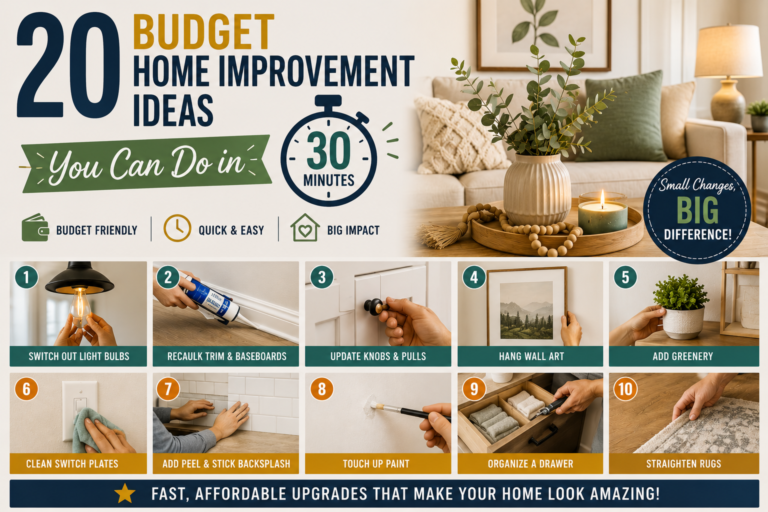
If this post got you fired up about small space organization, you’ll love my roundup of 20 budget home improvement ideas you can do in 30 minutes. Drop a comment below and let me know — what’s the most awkward small space in your home? I’d love to help you figure it out.